Waste-collection training in Hoima
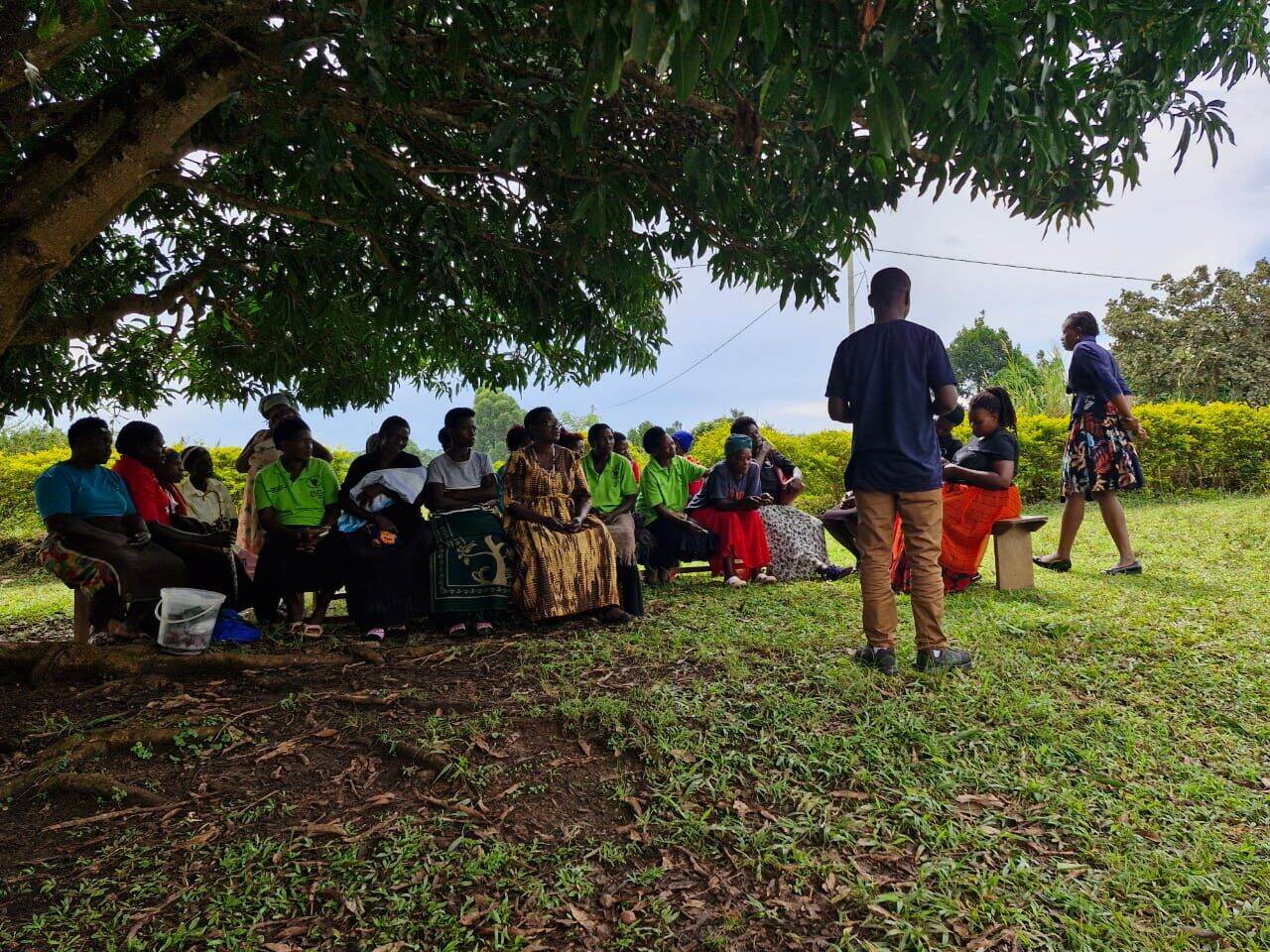
Community members in Hoima learned how to collect and sort plastic waste. Sorting matters: each plastic type melts differently, and collectors earn money for what they bring in.
A Makerere University research project
Sawdust-Plastic Ecobricks for Low-Cost Housing
Turning sawdust and plastic waste into durable bricks and pavers that communities in Uganda can use.
Led by Dr. Christine Nagawa · Funded by a UNESCO-OWSD Early Career Fellowship
The problem
Uganda's sawmills produce sawdust much faster than anyone can use it, so most of it is dumped or burned. Plastic is worse. Imports and use grew six-fold in three years, and since plastic doesn't biodegrade, whatever isn't collected ends up in landfills, in water bodies, or on a fire. Burning it releases gases linked to cancer and respiratory disease.
Housing demand is rising at the same time. The standard answer, fired clay bricks, comes at a cost of its own: the clay is dug from wetlands and the kilns burn wood. A brick made from waste avoids both.
The method
Collected plastic is sorted by type, cleaned, and melted in a closed system so nothing toxic escapes. Sawdust goes into the molten plastic, and the mix is moulded into standard-size bricks and pavers. Each batch is then tested against the fired clay and sand-cement bricks Ugandan builders use today.
Industrial and community partners are involved from the start, so that brick-making continues in these communities well after the research funding ends.
Field work
Community members in Hoima learned how to collect and sort plastic waste. Sorting matters: each plastic type melts differently, and collectors earn money for what they bring in.
The team visited Ecobrix, one of Uganda's largest plastic recycling centres, to see plastic processing at production scale before settling on the project's own methods.
Not all plastic is suitable for bricks. Women's groups learn to turn the rest into products they can sell, such as bags and pegs.
People
Principal Investigator
Lecturer in the Department of Forestry, Biodiversity and Nature Conservation at Makerere University, with a PhD from BOKU Vienna. Her research covers environmental chemistry, microplastics, renewable resources and waste management. Eco-Bricks builds on her work turning plastic waste and sawdust into wood-plastic composite building materials.
MSc Forest Resources Management
Graduate researcher working at the meeting point of forest resources, waste management and low-cost building materials. His MSc work supports the project's practical question: how sawdust and plastic waste can become useful construction inputs instead of disposal problems.
BSc Forestry, 4th year
Undergraduate researcher in Forestry at Makerere University. Raymond brings hands-on experience in sustainable timber management, wood preservation, forest product value chains and modern agricultural systems, including precision farming and greenhouse management.
Working with
The project works with Ecobrix in Masaka, Ecoplastile, the Katikolo Waste Workers and Sorters Association, municipal waste authorities, and community women's groups.
Contact
Department of Forestry, Biodiversity and Nature Conservation
School of Forestry, Environmental and Geographical Sciences
Makerere University, P.O. Box 7062, Kampala, Uganda
 Makerere